
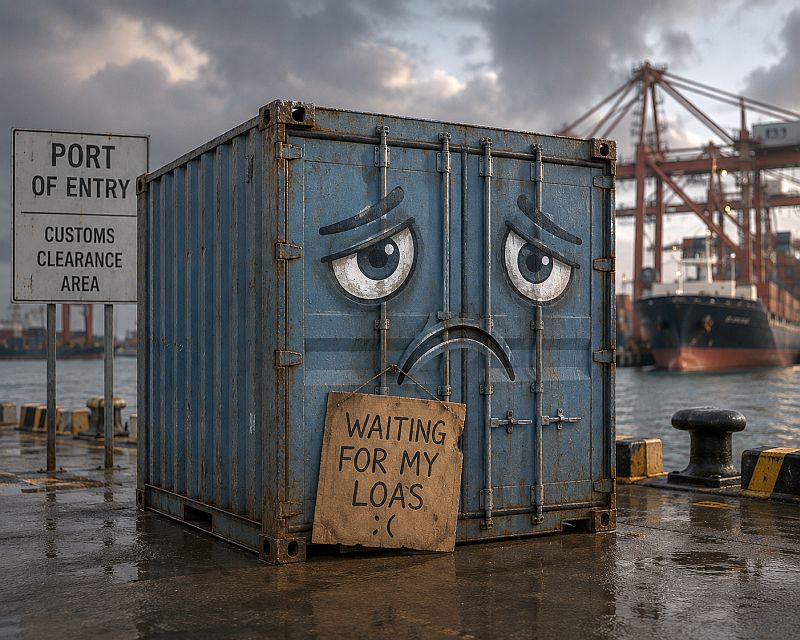
Most importers focus on the cost of the LOA itself — the laboratory fees, the application fee, and the professional fees. What many only discover when it is too late is the far larger expense that accumulates while the container sits at the port or in a depot waiting for that LOA to be issued.
That expense is demurrage and storage — and it can quickly exceed the cost of the compliance process itself.
What Demurrage Actually Is
Demurrage is the charge levied by the shipping line when a container is not collected or returned within the free time allowed after arrival. Once the free period expires, daily charges begin and rise steeply. In addition, the terminal or depot charges storage fees for the space the container occupies.
These charges continue every single day the goods remain uncleared. If the delay is caused by missing or inadequate NRCS documentation, the meter keeps running while the application is being sorted out.
How LOA Delays Translate into Real Money
A typical scenario looks like this:
- The container arrives and free time expires after a few days.
- The LOA application is incomplete or the test report is rejected.
- The importer scrambles to obtain the correct documentation or commission new testing.
- Meanwhile demurrage and storage accumulate at several hundred rands (and often far more) per container per day.
- By the time the LOA is finally issued, the additional port costs can run into tens or even hundreds of thousands of rands.
We regularly see cases where the demurrage and storage bill ends up higher than the original cost of the goods or the entire compliance exercise.
Why the Delays Happen
The most common causes are familiar:
- Test reports submitted to the wrong standard or from a laboratory that is not properly accredited.
- Missing South African national differences (especially plug and marking requirements).
- Incomplete model lists or product family groupings that the NRCS will not accept.
- LOA applications lodged only after the vessel has already sailed or arrived.
- Renewal applications left too late, so the previous LOA expires while the goods are in transit.
In each of these situations the container is already in the system and the daily charges have started. Fixing the compliance problem after arrival is almost always more expensive than preventing it.
Practical Steps to Avoid the Trap
- Start the LOA process before the goods are shipped Ideally the application should be under way (or the LOA already in hand) before the container is loaded.
- Confirm the test reports are acceptable before production or shipping A short technical review of the existing reports can reveal problems while there is still time to correct them.
- Build realistic time buffers Even a clean LOA application can take weeks. Factor this into your shipping schedule rather than assuming the approval will be instantaneous.
- Keep renewals current An expired LOA is one of the most frequent causes of last-minute panics at the port.
- Work with a compliance partner who understands both the regulatory and the commercial timelines The goal is not only to obtain the LOA, but to obtain it in time to avoid demurrage altogether.
The Bottom Line
Demurrage is not an unavoidable cost of importing. In most cases it is the direct financial consequence of leaving compliance too late or getting the documentation wrong. The daily charges at the port do not pause while you sort out a rejected test report or an incomplete application.
The cheapest LOA is the one that is secured before the vessel arrives. Everything after that point becomes progressively more expensive.
If you have containers on the water or about to be shipped and you are unsure about the status of your LOAs or test reports, contact us early. Preventing demurrage is almost always simpler and cheaper than trying to stop the meter once it has started.
Stay compliant. Avoid delays. Protect your business.