
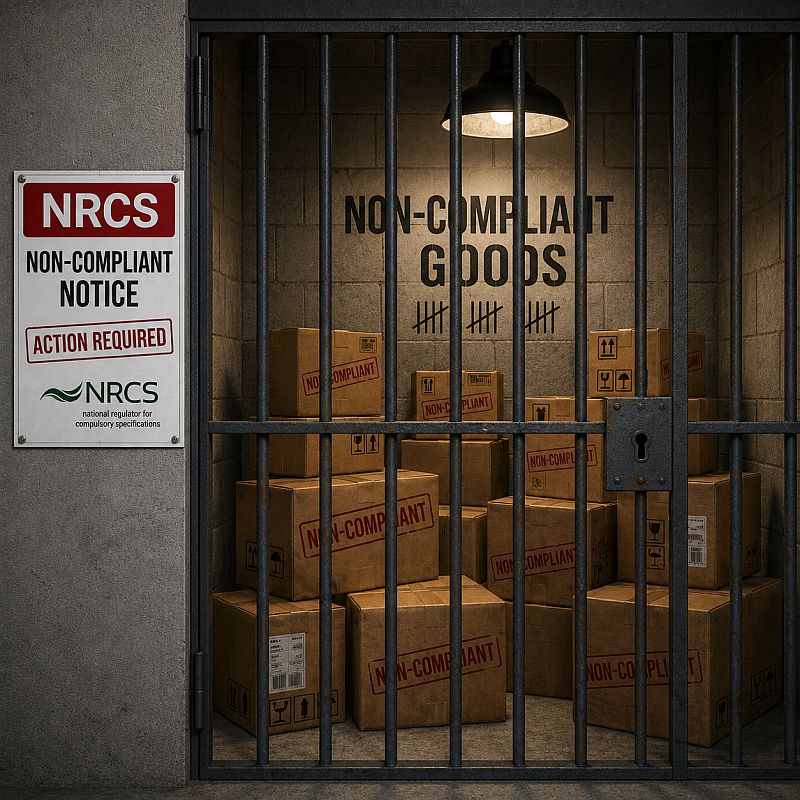
Receiving a non-compliance notice from an NRCS inspector is one of the more serious situations an importer or manufacturer can face. It means the regulator has found products that do not meet the relevant compulsory specification, and formal action is now underway. How you respond in the first few days often determines whether the matter is resolved relatively smoothly or escalates into product seizures, destruction orders, significant costs, or even criminal investigation.
What a Non-Compliance Notice Typically Means
NRCS market surveillance inspectors have the authority to inspect products at ports, warehouses, retail outlets and distribution centres. When they identify non-compliant goods, they may issue a written notice or directive. This can require you to:
- Stop selling or distributing the affected products immediately
- Keep the stock in a specified location and not dispose of or alter it
- Provide proof of conformity (valid test reports and LOA) within a set timeframe
- Correct identified defects if the product can be brought into compliance
If satisfactory evidence is not provided, or if the products pose a safety risk, the NRCS can escalate the matter. Under the NRCS Act, this may lead to a formal directive requiring the goods to be returned to the country of origin, destroyed, or dealt with as the regulator sees fit. The costs of destruction or return are usually recovered from the possessor of the goods.
In serious cases — particularly where instructions are ignored or where there is a clear safety risk — the NRCS may open a criminal case.
Immediate Steps You Should Take
1. Do not ignore the notice Acknowledge receipt in writing and comply with any instruction not to sell or move the stock. Failing to follow an inspector’s lawful instruction can itself become a criminal offence.
2. Read the notice carefully Note the exact products and model numbers listed, the alleged non-compliance, the deadline given, and any specific actions required. Deadlines are often short (sometimes as little as five working days to provide reasons or documentation).
3. Gather your documentation immediately Pull together the LOA (if one exists), the full IEC-format test reports, photographs, and any other supporting evidence that relates to the products in question. Check whether the test reports are still valid and cover the exact models listed in the notice.
4. Assess whether the products can be brought into compliance In some cases the issue may be correctable (for example, missing or incorrect markings, or a labelling problem). In other cases the fundamental design or test evidence is inadequate and the products cannot be sold as they stand.
5. Respond formally and on time Submit a clear written response within the stipulated period. If you believe the notice is incorrect, set out your reasons and attach supporting evidence. If the products are non-compliant, state what corrective action you propose (re-export, destruction, or rectification where possible).
6. Seek specialist assistance early NRCS processes move quickly once a formal notice has been issued. An experienced compliance specialist can help you interpret the notice, prepare the response, engage with the inspectorate, and explore the least damaging options available.
Possible Outcomes
- The matter is closed after you supply acceptable evidence of conformity.
- You are allowed to correct the products (where technically feasible) under NRCS supervision.
- The goods must be returned to the country of origin at your cost.
- The goods are destroyed, with the costs recovered from you.
- In the worst cases, criminal charges may be pursued and future import activities more closely scrutinised.
Prevention Is Always Preferable
Most non-compliance notices arise because products were imported without a valid LOA, or because the supporting test reports were inadequate, outdated, or did not cover the actual models being sold. Regular internal checks, proper product grouping, and keeping LOAs and test reports current remain the most effective protection.
If you have received a non-compliance notice, or if an NRCS inspector has raised concerns about your stock, contact us as soon as possible. We assist clients with the practical steps required to respond properly and to limit the commercial damage.
Stay compliant. Avoid delays. Protect your business.