
If you are importing goods into South Africa, you already know about compliance essentials like the NRCS Letter of Authority (LOA) or ICASA type approvals. But there is another regulatory hurdle you must clear before your shipment even leaves the port: correctly classifying your goods with a tariff code.
At Advanced Technical Services, our primary focus is helping you secure your NRCS LOAs. However, we know that total import compliance requires a bigger picture.
Here is a straightforward guide to understanding tariff codes and why getting them right is critical.
What is a Tariff Code?
A tariff code—also commonly referred to as a Harmonised System (HS) code or commodity code—is a standardised numerical classification used by customs authorities globally to identify traded goods.
Every single commercial product crossing South Africa’s borders must be assigned one of these codes. Developed by the World Customs Organisation (WCO), the system ensures that customs officials and importers speak the same language, regardless of regional product names.
Why Tariff Codes Matter to Your Business
Failing to understand or correctly apply your HS codes will cost you money. The code assigned to your product directly determines:
-
- Customs Duty Rates: The percentage of tax you pay on the value of the goods.
- Import VAT: The calculated tax applied at the port of entry.
- Permit & License Requirements: Whether you need additional documentation, such as an NRCS LOA or an ICASA certificate.
- Trade Restrictions: Whether your goods face strict quotas or anti-dumping duties.
The Risk of Getting It Wrong: If you use an incorrect code, the South African Revenue Service (SARS) can seize your shipment, issue heavy financial penalties, or delay your cargo indefinitely while conducting exhaustive compliance audits. Although most suppliers will provide you with an HS Code, it will be a “best guess” so ensure that you check for yourself.
How Wrong Tariff Codes Stall Your NRCS Approvals
An incorrect tariff code doesn’t just trigger red flags at customs; it can completely derail your NRCS Letter of Authority (LOA) application process. When you submit a product for NRCS compliance, the evaluators cross-reference your technical test reports against the specific compulsory specifications tied to your declared tariff code.
If your HS code is inaccurate, you risk applying under the wrong regulatory framework. This mismatch leads to immediate application rejections, forced resubmissions, and frustrating back-and-forth negotiations with inspectors. By the time you untangle the paperwork and correct the classification, weeks or even months of prime selling time can be lost while your stock sits stranded.
If your HS code is inaccurate, you risk applying under the wrong regulatory framework. This mismatch leads to immediate application rejections, forced resubmissions, and frustrating back-and-forth negotiations with inspectors. By the time you untangle the paperwork and correct the classification, weeks or even months of prime selling time can be lost while your stock sits stranded.
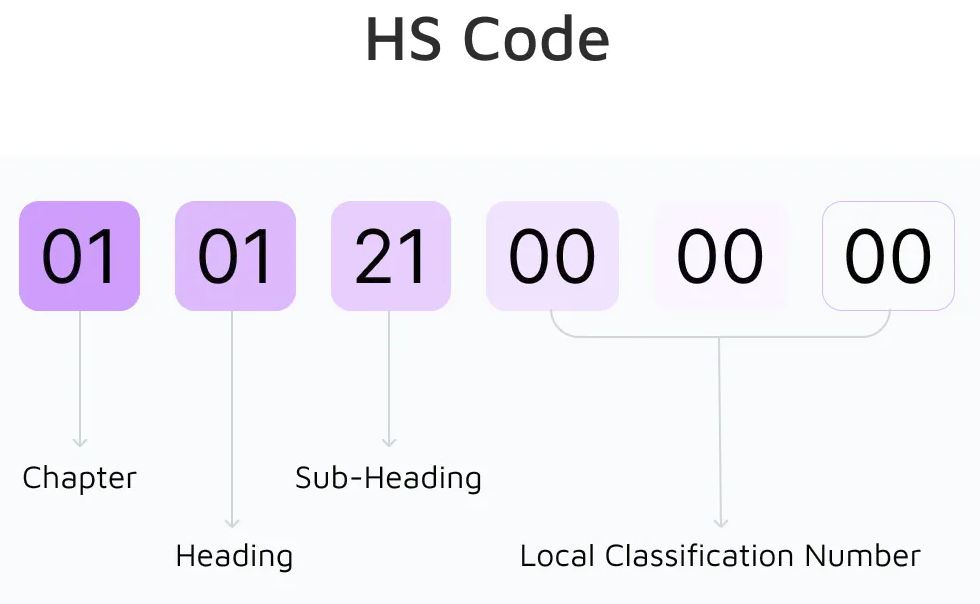
How an HS Code is Structured
Standard international tariff codes consist of six digits. However, South Africa adds national subdivisions to create an eight-digit code (plus a specific check digit used internally by SARS).
The structure flows from general categories to highly specific product details:
-
- First 2 Digits (Chapter): The broad category of the product (e.g., Chapter 85 for electrical machinery).
- Next 2 Digits (Heading): A narrower breakdown within that chapter.
- Next 2 Digits (Subheading): Highly specific product characteristics.
- Final 2 Digits (National Subdivision): Custom classifications specific to South African trade requirements.
How to Find Your Product’s Tariff Code
To locate your code, you must consult Schedule 1 Part 1 of the South African Customs and Excise Act, which details every legal code configuration. The process generally follows these steps:
-
- Find your Chapter: Pinpoint the broad section your product falls under.
- Read the Chapter Notes: Look at the legal exclusions at the start of the chapter to ensure your item doesn’t actually belong elsewhere.
- Locate the Heading & Subheading: Filter down through the grey-highlighted headings until you find the exact match.
- Match the Article Description: Read the specific product descriptions carefully to choose the exact eight-digit code that fits your item.
Compliance Goes Hand-in-Hand
Determining your tariff code is step one. Step two is identifying if that specific code triggers a mandatory NRCS compulsory specification or ICASA type approval requirement.
If your code indicates that you are importing regulated electrical components, electronic communications, or automotive parts, your customs clearance will be blocked without a valid LOA.
Need help navigating the NRCS or ICASA side of your import compliance? Contact the Advanced Technical Services team today to secure your Letters of Authority efficiently and legally.